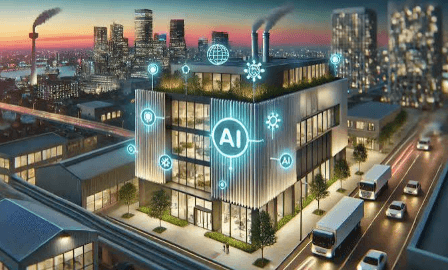
AI can translate diverse data streams into actionable building operations, enabling adaptive HVAC, lighting, and security controls that reduce waste and improve comfort. Sensing and data fusion provide real-time situational awareness and coherent responses, while robust governance supports auditable deployments and scalable integration. Predictive maintenance and outcome-driven metrics connect insights to ROI. The challenge lies in selecting models, ensuring data quality, and managing change across facilities, leaving decision-makers with a clear impetus to pursue next steps.
What AI Can Automate in Building Operations
AI can automate a wide range of building operations tasks, translating complex data streams into actionable actions. The analysis identifies standardized control sequences, enabling adaptive HVAC, lighting, and security responses while reducing energy waste.
AI driven zoning allocates conditions by occupancy and zones.
Predictive maintenance anticipates equipment failures, extending lifespan and minimizing downtime through data-driven scheduling and proactive interventions.
Freedom-oriented efficiency emerges from transparent, measurable optimization.
How Ai-Driven Sensing and Data Improve Comfort and Efficiency
Sensors and data streams enable precise, real-time adjustments to indoor environments, translating complex signals into actionable comfort and efficiency improvements. AI driven sensing enables continuous monitoring, while data fusion integrates diverse inputs for coherent situational awareness.
The result is enhanced occupant comfort and energy efficiency, supported by transparent metrics and adaptive controls that reduce waste and optimize thermal, lighting, and airflow decisions.
Choosing AI Solutions: Models, Data, and Integration
Selecting appropriate AI solutions requires a disciplined evaluation of model types, data quality, and integration pathways. The process emphasizes model selection, ensuring compatibility with existing systems and scalability. Data governance structures define provenance, stewardship, and access controls, while integration plans minimize disruption. Analysts compare performance, risk, and cost, guiding decisions toward transparent, auditable deployments that support building efficiency and freedom to adapt.
Real-World ROI: Metrics, Case Studies, and Implementation Pitfalls
Real-World ROI hinges on translating data-driven insights into measurable performance gains, with metrics that reliably capture energy use, occupancy comfort, maintenance efficiency, and operational resilience.
ROI benchmarks summarize value across systems, while case studies reveal practical gains and risks.
Effective implementation highlights maintenance scheduling, data quality, and change management, guiding scalable deployments that avoid overfitting and align with business goals.
Frequently Asked Questions
How Do AI Ethics Influence Building Automation Decisions?
AI ethics influence building automation decisions by prioritizing privacy concerns and bias mitigation, guiding data governance, and ensuring transparent, auditable policies; it favors solutions that balance efficiency with user autonomy, accountability, and measurable, data-driven risk assessments.
What About Data Ownership and Privacy in Ai-Enabled Systems?
“Knowledge is power,” states the observer, as data ownership and privacy concerns shape AI-enabled systems. It analyzes governance, proposes clear ownership frameworks, minimizes data exposure, and champions consent-driven, transparent data use with auditable, privacy-by-design safeguards.
Can AI Replace Human Facility Managers Entirely?
AI deployment cannot fully replace human facility managers; it augments decisions. Implementation challenges include trust, integration, and governance. Solutions rely on hybrid models with clear roles, continuous data-driven monitoring, and measurable outcomes for empowered, freedom-minded teams.
How Does AI Handle System Failures and Safety Concerns?
In shadows of Prometheus, AI handles failures via redundancy and monitoring, balancing safety protocols with rapid rollback. It addresses AI failure modes, data privacy, interoperability standards, and transparent decision logs to sustain resilient, freedom-minded building operations.
See also: newsfried
What Standards Ensure Interoperability Across Diverse Equipment?
Standards ensure interoperability across diverse equipment by defining interfaces and data models; interoperability hinges on open specifications, while equipment compatibility relies on conformance testing. Standards interoperability reduces vendor lock-in, guiding scalable, data-driven integration for freedom-seeking operators.
Conclusion
AI-enabled building operations translate streams of data into precise actions, driving adaptive HVAC, lighting, and security that reduce waste and boost comfort. A data-driven framework—governance, sensing fusion, and predictive maintenance—yields measurable ROI and scalable deployments. By aligning technology with clear business metrics, organizations can anticipate issues, optimize performance, and validate outcomes. In this landscape, AI acts as a compass, steering operations toward efficiency with data as the steady, reliable north.
